
Introduction
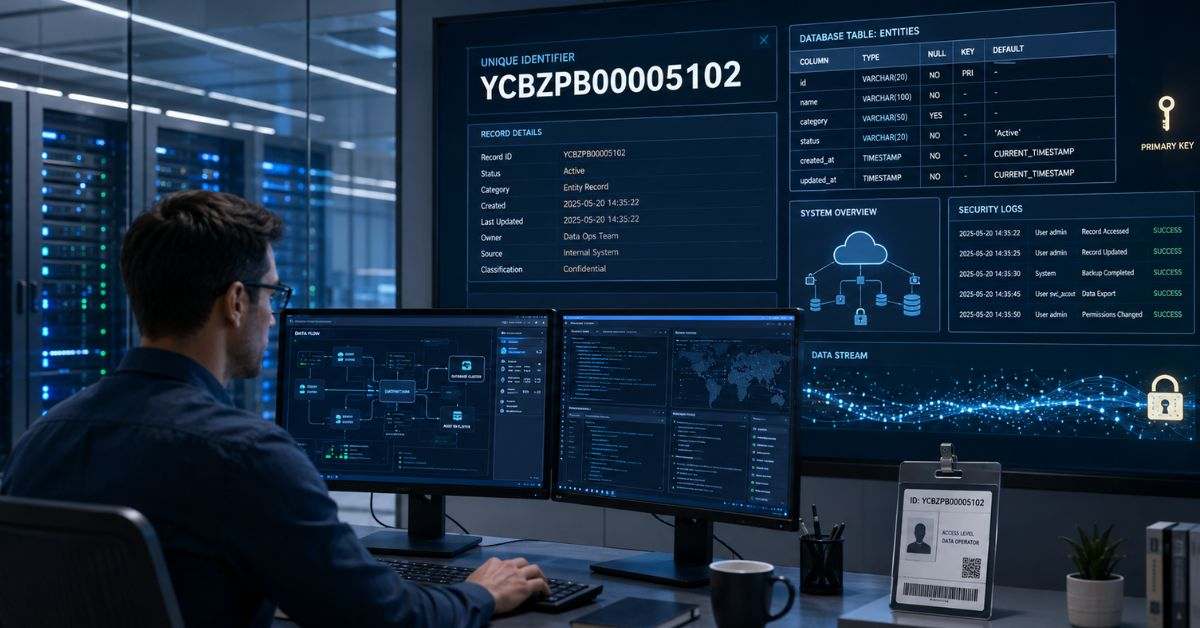
In today’s interconnected digital landscape, structured identification codes are the invisible backbone of technological infrastructure. One such example is YCBZPB00005102, a unique alphanumeric code typically used in systems, databases, or technical records to identify something specific. While it may appear random at first glance, identifiers like this serve critical functions in organizing, tracking, and protecting digital information.
As businesses generate massive amounts of data daily, the need for reliable and scalable identification systems becomes essential. Without structured identifiers, organizations would struggle with duplication, data corruption, and operational inefficiencies. Codes like YCBZPB00005102 ensure that every object, transaction, or entity within a system has a distinct digital identity.
This comprehensive guide explores what YCBZPB00005102 represents, how such codes are structured, where they are used, and why they are indispensable in database management, cybersecurity, enterprise software, and emerging technologies. By the end of this article, you will understand how a simple-looking code plays a powerful role in maintaining digital order and system integrity.
What Is YCBZPB00005102?
YCBZPB00005102 is a structured alphanumeric identifier designed to uniquely represent a specific entity within a digital system. In technical environments, these identifiers function as digital fingerprints that distinguish one record from millions of others.
Rather than being random text, this code is typically generated through a predefined logic embedded in enterprise systems. It may represent a product, transaction, system log entry, database record, or asset within an organization.
In large-scale systems, unique identifiers serve several important purposes:
- Prevent duplication of records
- Enable accurate data retrieval
- Support system integration
- Ensure traceability across processes
For example, in a logistics platform, YCBZPB00005102 could represent a specific shipment. In a CRM system, it might identify a customer profile. The key principle remains the same: one code equals one unique entity.
Modern information systems depend heavily on structured identification to maintain operational clarity. Without it, relational databases would fail to connect data properly, reporting systems would produce unreliable results, and security logs would lack accountability.
In essence, YCBZPB00005102 symbolizes structured digital identity, a cornerstone of organized technology ecosystems.
Breaking Down the Structure of YCBZPB00005102
Although we cannot confirm its exact origin, structured identifiers usually follow a logical pattern. YCBZPB00005102 likely consists of two primary components: a prefix and a numeric sequence.
| Segment | Example | Possible Function |
| Prefix | YCBZPB | System, department, or category code |
| Numeric Sequence | 00005102 | Sequential or auto-generated record number |
The prefix may indicate a department, region, product category, or software module. The numeric portion often represents an incrementing value generated automatically by a database.
Structured alphanumeric codes offer several advantages over purely numeric identifiers:
- They provide categorization at a glance.
- They expand the total number of possible combinations.
- They reduce duplication risk.
- They allow system-based grouping.
For instance, a manufacturing ERP system might use different prefixes for hardware, software, and logistics components. This improves reporting efficiency and simplifies database filtering.
Such structures are common in enterprise-level applications, including SAP, Oracle ERP, and Microsoft Dynamics. By embedding meaning within the identifier itself, organizations create smarter data ecosystems that enhance traceability and analytics.
Applications of YCBZPB00005102 Across Industries
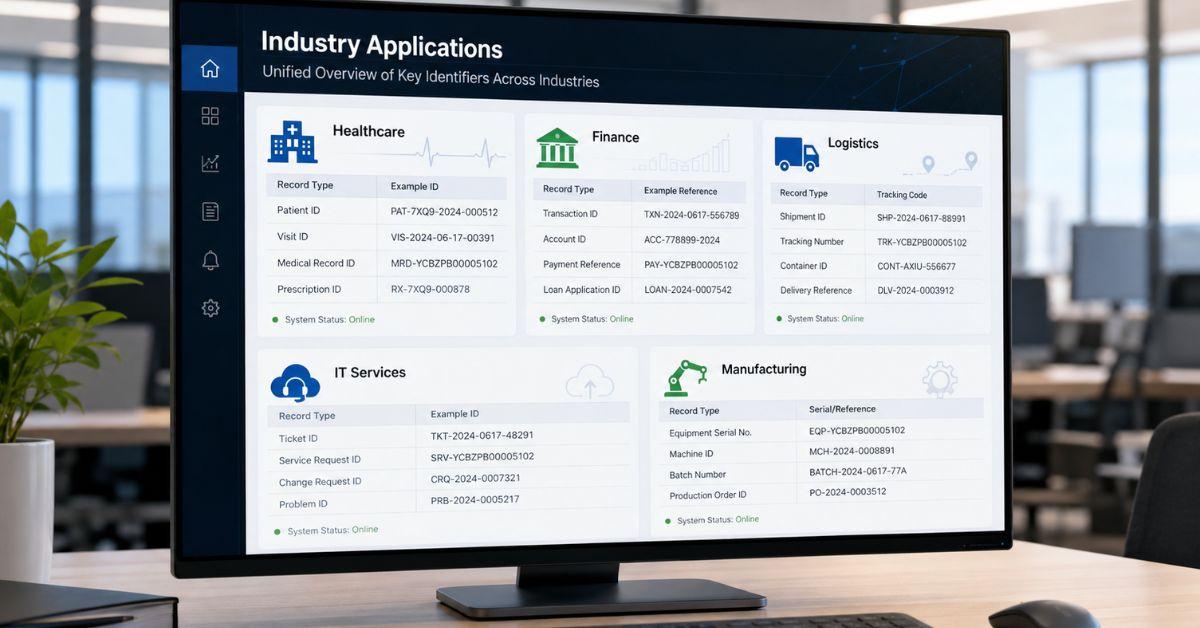
Unique identifiers like YCBZPB00005102 are widely used across various technology-driven industries. Their purpose depends on the environment in which they are deployed.
In database-driven environments, these codes may represent:
- Customer IDs
- Order numbers
- Ticket references
- Asset tracking IDs
- Transaction records
Different industries rely on structured identifiers for specific operational needs.
| Industry | Practical Application |
| Healthcare | Patient or lab record identification |
| Finance | Secure transaction references |
| Logistics | Shipment tracking numbers |
| IT Services | Incident or support ticket codes |
| Manufacturing | Component or equipment serial numbers |
For example, in an e-commerce system, every order must have a unique reference number to ensure accurate shipping and billing. Similarly, in financial systems, transaction IDs prevent duplication and enable audit compliance.
Cloud platforms such as AWS and Microsoft Azure also generate unique resource identifiers to manage virtual machines, storage objects, and network configurations. These identifiers ensure precise resource allocation and usage monitoring.
Without structured codes, system-wide coordination across multiple departments and global locations would become chaotic.
Role in Database Architecture
Database systems are built around the concept of unique identification. In relational databases, every table typically contains a primary key, a field that uniquely identifies each row.
YCBZPB00005102 may serve as
- A primary key within a relational database
- A foreign key linking to another dataset
- A unique indexed column for performance optimization
Primary keys are essential for maintaining referential integrity. They ensure that relationships between tables remain consistent and accurate.
- Query performance
- Data integrity
- Scalability
- Reporting accuracy
Industry documentation from Oracle and Microsoft emphasizes the importance of well-designed key structures for high-performance systems.
In short, identifiers like YCBZPB00005102 are not optional, they are foundational to database reliability.
Cybersecurity and Audit Significance
Structured identifiers play a crucial role in security operations. In cybersecurity frameworks, tracking activity depends on unique references assigned to users, sessions, and transactions. Security logs often include identifiers for:
- Login sessions
- API requests
- File access events
- System changes
For example, during an investigation, security analysts may trace suspicious activity linked to a specific log reference. Without structured IDs, isolating incidents would be significantly more difficult.
According to NIST cybersecurity guidelines, maintaining unique audit identifiers strengthens accountability and compliance reporting.
Benefits in security environments
- Improved traceability
- Faster incident response
- Enhanced forensic analysis
- Regulatory compliance support
Structured identifiers reduce ambiguity and improve transparency in digital operations.
Structured vs. Random Identifiers
Not all identification codes follow structured patterns. Some systems use completely random values for enhanced security.
| Feature | Structured Code | Random Code |
| Human readability | Moderate | Low |
| Category insight | Yes | No |
| Debugging ease | Easier | Harder |
| Security strength | Moderate | High |
Structured identifiers like YCBZPB00005102 are ideal for enterprise systems where categorization matters. Random identifiers, such as cryptographic tokens, are better suited for temporary authentication or anonymous sessions.
Choosing between the two depends on system goals: operational clarity or cryptographic security.
Case Study: Enterprise Asset Management
A multinational manufacturing company implemented structured identifiers similar to YCBZPB00005102 for tracking internal equipment.
Before implementation
- Duplicate entries caused reporting errors
- Manual audits consumed weeks
- Asset loss incidents were difficult to trace
After introducing structured ID logic
- Asset tracking improved by 40%
- Audit processing time reduced by 50%
- Compliance reporting became automated
Each machine, spare part, and maintenance record received a unique alphanumeric code. The ERP system integrated seamlessly across warehouses and global offices.
This real-world example demonstrates how structured identification enhances operational efficiency and financial transparency.
How Systems Generate Codes Like YCBZPB00005102
Most enterprise systems use automated generation mechanisms. These are embedded within databases or application logic layers.
Common generation techniques
- Auto-increment sequences
- Timestamp-based algorithms
- UUID (Universally Unique Identifier) standards
- Hash-based logic
For example, PostgreSQL supports sequence generators, while MongoDB uses ObjectId formats that embed timestamp data.
Modern distributed systems often rely on GUIDs to avoid duplication across microservice architectures.
Effective code generation ensures
- Uniqueness
- Scalability
- Cross-system compatibility
These technical safeguards prevent record conflicts in high-volume environments.
Digital Systems and SEO Infrastructure
Even websites and digital platforms rely on structured identifiers behind the scenes. Content management systems use internal IDs to:
- Distinguish articles
- Manage database entries
- Avoid URL duplication
- Track user sessions
Although users may not notice these codes, search engines rely on unique identifiers to properly index and manage content structures. E-commerce platforms, CRM systems, and analytics tools all depend on such digital identifiers to function efficiently.
The Future of Identification Systems
As technology evolves, identification systems are becoming more advanced. Emerging trends include AI-driven classification, blockchain-based immutable IDs, and decentralized identity systems.
Future developments may integrate
- Blockchain verification
- IoT device identifiers
- Zero-trust security models
- Smart contract authentication
Structured identifiers will remain central to digital ecosystems. However, their generation and management will become more intelligent, secure, and globally standardized. Organizations investing in scalable identification frameworks today are preparing for a more interconnected tomorrow.
FAQs
What is YCBZPB00005102 used for?
It is typically used as a unique identifier within databases or technical systems to distinguish a specific record or object.
Is YCBZPB00005102 a serial number?
It can function similarly to a serial number, depending on the system’s design.
Are such identifiers secure?
Yes, when generated and managed properly, they support secure tracking and audit processes.
Can identifiers be duplicated?
Properly designed systems prevent duplication using database constraints and validation logic.
How are these codes generated?
They are created using database sequences, algorithms, or globally unique identifier frameworks.
Conclusion
YCBZPB00005102 may look like a simple alphanumeric string, but it represents the structured intelligence that powers modern digital systems. From database architecture and enterprise software to cybersecurity frameworks and cloud computing, unique identifiers ensure organization, scalability, and operational integrity.
Throughout this guide, we explored its structure, applications, generation methods, and strategic importance. As digital transformation accelerates, reliable identification systems will continue to underpin innovation and efficiency.
Understanding identifiers like YCBZPB00005102 equips businesses and IT professionals with the knowledge needed to build secure, scalable, and future-ready systems.