
Introduction
The internet has a unique way of turning seemingly random words into viral sensations. One such term gaining attention across social media platforms is dakittieztittiez. At first glance, it might appear playful, absurd, or even nonsensical—but beneath its surface lies a deeper reflection of meme culture, digital identity, and online humor trends.
In today’s hyper-connected world, internet slang evolves at lightning speed. Words are invented, reshaped, and amplified by communities on TikTok, X (formerly Twitter), Instagram, Reddit, and Discord. Dakittieztittiez represents more than just a quirky phrase; it’s part of a broader phenomenon where exaggerated spelling, irony, and layered humor define digital communication.
This article explores the meaning, origin, cultural significance, and online rise of dakittieztittiez. You’ll learn how it fits into meme ecosystems, why it resonates with Gen Z and Gen Alpha audiences, and what it reveals about internet language trends. Whether you’re a digital culture enthusiast, content creator, or curious reader, this guide offers a comprehensive and SEO-optimized deep dive into the term’s viral journey.
What Does Dakittieztittiez Mean?
At its core, dakittieztittiez is an exaggerated, stylized internet term rooted in playful phonetics and meme-driven word distortion. Like many viral slang phrases, it thrives on humor, irony, and absurdity rather than literal meaning.
The structure of the word suggests the following:
- “Da” informal slang prefix often used in memes
- “Kittiez” stylized spelling of “kitties”
- “Tittiez” exaggerated phonetic spelling commonly used in internet humor
However, in meme culture, literal definitions often matter less than context. The phrase is typically used as follows:
- As a humorous username or handle
- In ironic memes or parody content
- To amplify exaggerated online personas
- As part of chaotic or absurd humor trends
This type of term aligns with “brainrot humor,” a style of internet comedy characterized by surreal language, distorted spelling, and exaggerated expressions.
Key Characteristics
- Non-standard spelling
- Playful exaggeration
- Meme-friendly structure
- Designed for virality
Importantly, its usage often leans into parody rather than explicit meaning. Like many viral phrases, its power lies in tone, delivery, and context not dictionary definitions.
The Origins of Dakittieztittiez
Pinpointing the exact origin of dakittieztittiez is challenging much like tracing most internet slang. Viral terms often emerge organically within niche online communities before spreading to mainstream platforms.
Likely Origin Pathways
- Meme forums (Reddit, 4chan-style boards)
- Gaming communities and Discord servers
- TikTok sound trends
- Twitter/X parody accounts
Internet linguistics shows that stylized spellings such as “-iezz” or “-ezz” became popular in early 2010s meme culture. They were used to exaggerate tone and add comedic flair.
A similar pattern appeared in:
- “doggo” and “pupper” slang
- LOLcat language (“I can haz cheezburger”)
- Tumblr-era fandom humor
Dakittieztittiez follows that same evolution—blending absurdism with internet-native phonetics.
Cultural Timing
Its rise aligns with:
- The growth of short-form video content
- Meme remix culture
- Identity experimentation online
- The normalization of absurd humor
Rather than being invented by a single person, it likely emerged as part of collaborative internet creativity.
The Role of Meme Culture in Its Popularity
Meme culture is the engine behind viral language. Without memes, terms like dakittieztittiez would rarely spread beyond small communities.
Memes operate on:
- Shareability
- Humor shock value
- Relatability
- Remix potential
Dakittieztittiez works well in meme formats because
- It sounds exaggerated.
- It grabs attention visually
- It feels chaotic in a humorous way.
- It can be adapted to captions, reactions, or parody posts.
Why Meme Language Evolves This Way
Internet humor often thrives on:
- Intentional misspelling
- Irony and anti-humor
- Mock seriousness
- Hyperbole
In meme ecosystems, randomness becomes currency. The more unexpected a phrase appears, the more likely it is to gain traction.
Digital Identity and Username Culture
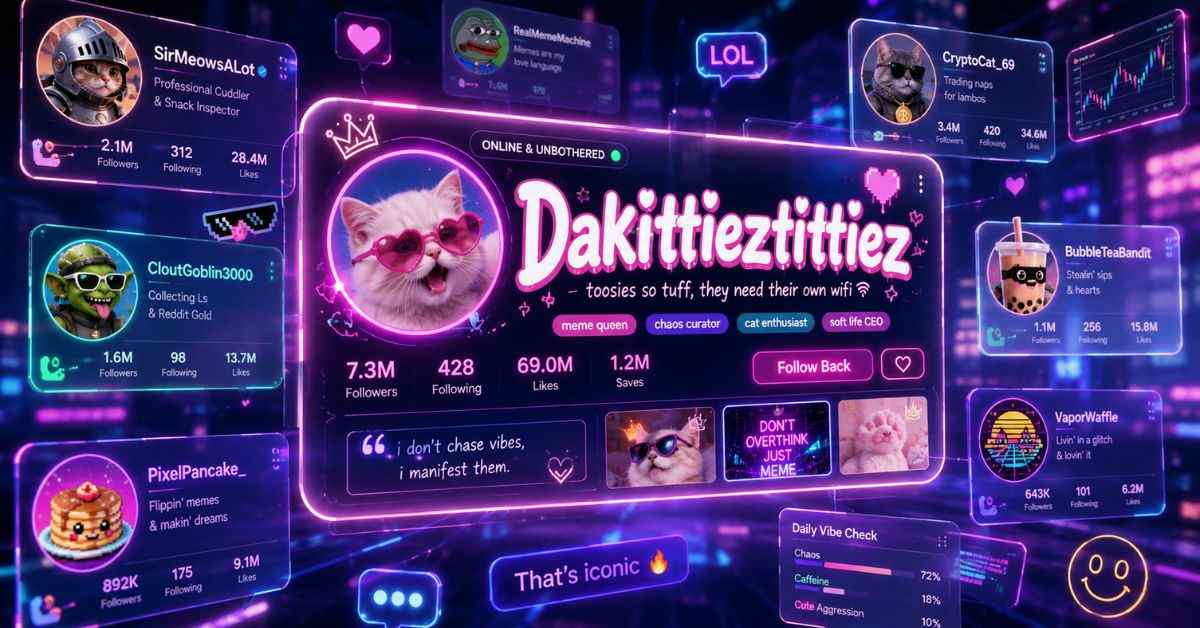
One of the most significant aspects of dakittieztittiez is its compatibility with online identity building.
Usernames today serve as
- Personal branding tools
- Social signals
- Humor statements
- Community identifiers
Playful names with exaggerated spelling often suggest the following:
- A non-serious persona
- Familiarity with meme culture
- Participation in niche communities
- Irony-driven self-expression
Why Users Choose Such Names
- To stand out in crowded platforms
- To embrace absurd humor
- To signal belonging to meme-savvy groups
- To avoid overly formal digital identity
In digital sociology, this aligns with “performative identity”—where users craft exaggerated online personas distinct from their real-world identities.
Linguistic Patterns Behind Viral Slang
Understanding dakittieztittiez requires looking at broader internet linguistics.
| Linguistic Feature | Purpose in Meme Culture | Example |
| Intentional Misspelling | Adds humor or irony | “kittiez” |
| Phonetic Spelling | Emphasizes tone | “tittiez” |
| Reduplication | Increases memorability | Double syllables |
| Absurd Blending | Creates novelty | Combined playful words |
These patterns increase
- Memorability
- Shareability
- Emotional impact
Linguists studying digital communication (see research from Pew Research Center and academic publications on internet language) note that online communities often create inside jokes through spelling distortion.
Case Study: Viral Spread Through TikTok and X
To illustrate how similar terms spread, consider the case of stylized meme usernames that gained traction on TikTok.
Case Study Overview
A parody account using exaggerated spelling:
- Posted short comedic videos
- Used trending audio clips
- Encouraged remixing
Within weeks:
- Gained 50K+ followers
- Sparked imitation usernames
- Inspired meme recreations
Viral Growth Table
| Stage | Platform | Engagement Driver | Result |
| Niche Launch | Discord | Community humor | Early adoption |
| Public Spread | TikTok | Short-form virality | Rapid visibility |
| Amplification | X (Twitter) | Meme reposting | Cultural recognition |
Dakittieztittiez follows this same viral architecture—small group adoption followed by algorithmic amplification.
Psychological Appeal of Absurd Internet Humor
Why do terms like dakittieztittiez resonate?
Research in digital psychology suggests absurd humor:
- Reduces stress
- Builds community bonds
- Creates insider identity
- Encourages playful creativity
Absurdity works because
- It disrupts expectations
- It feels spontaneous.
- It avoids seriousness.
- It invites participation
In a digital era saturated with news and information overload, lighthearted nonsense provides relief.
Comparisons With Similar Viral Terms
Dakittieztittiez belongs to a broader ecosystem of exaggerated internet slang shaped by humor and creativity. Like animal meme slang such as “doggo” or “floof,” it uses playful distortion for emotional and comedic effect. It also connects with brainrot humor, where chaotic and absurd wording is meant to entertain rather than make literal sense.
Additionally, it reflects the style of parody usernames and fandom slang, which rely on irony and inside jokes to build digital identity and community bonding. Together, these trends show how exaggerated language helps users express personality and participate in meme culture.
Key Similarities
- Informal phonetics
- Playful tone
- Viral adaptability
- Identity signaling
Unlike traditional slang, these words are less about communication efficiency and more about cultural participation.
Understanding terms like dakittieztittiez helps creators stay aware of evolving internet humor and digital identity trends. It shows how online communities build shared language and express personality through playful slang.
Best practices
- Use viral terms naturally, not forcefully
- Match the tone of your audience
- Stay aware of how the term is being used
When used authentically, such language can boost relatability and connection. However, overusing or misusing viral slang may feel inauthentic and lead to audience backlash.
The Future of Internet Language Trends
Internet slang evolves rapidly. Today’s viral term may disappear tomorrow—or transform into something new.
Future trends may include
- AI-generated slang
- Hyper-personalized meme language
- Audio-based catchphrases
- Cross-platform slang hybrids
Dakittieztittiez reflects a broader movement toward the following:
- Identity experimentation
- Playful absurdism
- Community-coded language
As digital spaces expand, expect more stylized, exaggerated expressions to emerge.
FAQs
Is dakittieztittiez an official slang word?
No. It’s an informal internet term shaped by meme culture rather than recognized dictionaries.
Where did dakittieztittiez originate?
Its precise origin is unclear, but it likely emerged within meme or gaming communities before spreading to mainstream platforms.
Is the term meant to be serious?
Generally, no. It’s used humorously or ironically within digital spaces.
Why do people use exaggerated spellings online?
Exaggerated spelling enhances humor, tone, and memorability while signaling participation in meme culture.
Can brands use viral terms like dakittieztittiez?
Brands can reference internet slang carefully, but authenticity is crucial to avoid seeming forced or out of touch.
Conclusion
Dakittieztittiez may appear random at first glance, but its rise illustrates powerful truths about digital culture. Internet language thrives on exaggeration, irony, and community participation. Words like these aren’t used to mean exactly what they sound like; they’re used for fun, to show who you are, and to express yourself creatively.
From meme forums to TikTok feeds, stylized slang reflects how younger generations communicate in dynamic, playful ways. It highlights the evolution of online identity and the psychological appeal of absurd humor.
Understanding these trends isn’t just entertaining—it’s valuable. For creators, marketers, and digital culture observers, tracking viral language provides insight into shifting communication patterns.
As online groups continue to change, you can expect more expressions that are playful, random, and based on identity to show up. Staying curious and culturally aware is the best way to keep up.